NFT Trends 2025-2026: Beyond Collectibles To Real-World Utility
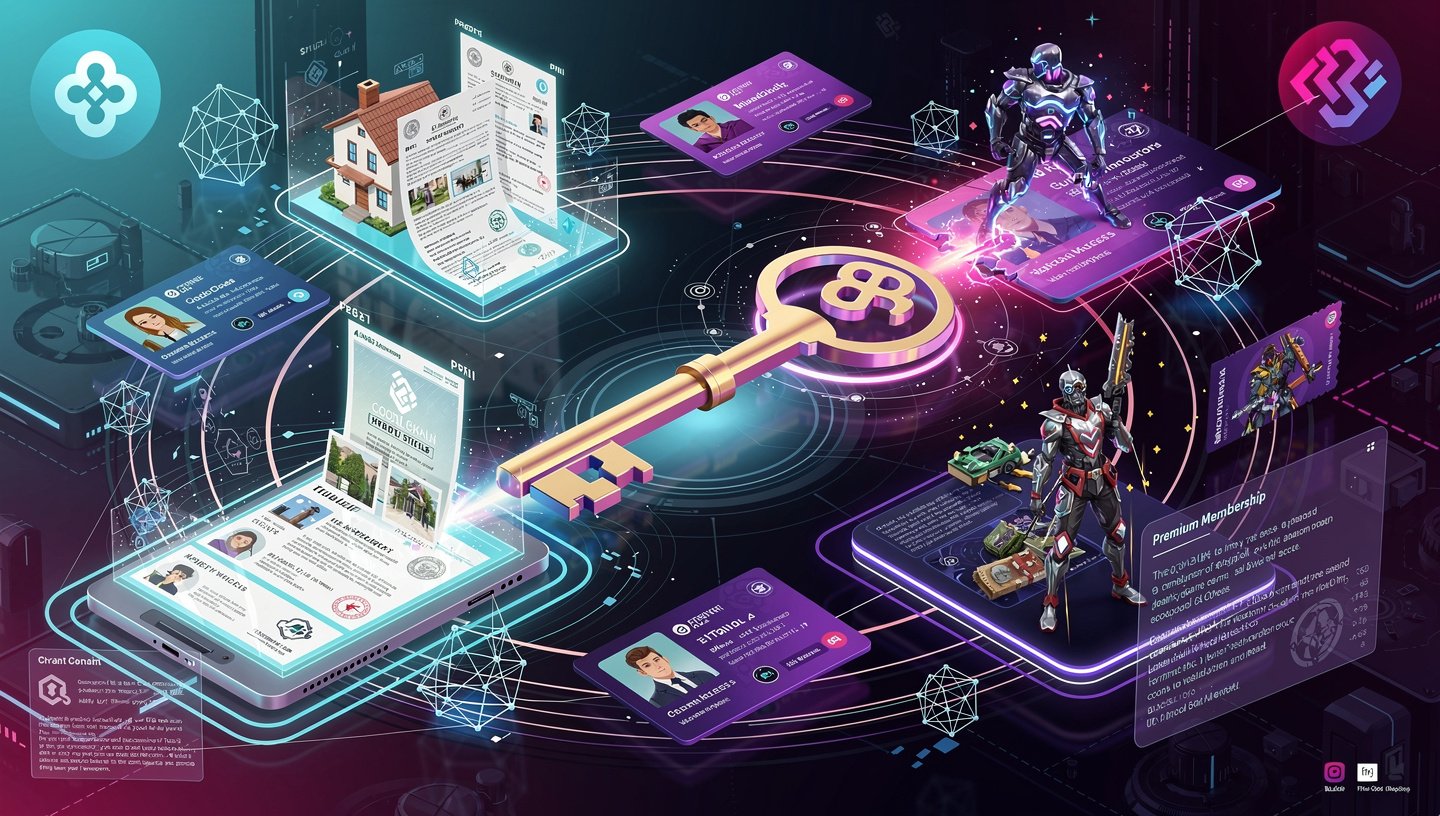
Non-Fungible Tokens (NFTs) have evolved far beyond their original purpose as digital collectibles. What started as a way to tokenize digital art is now transforming industries from gaming to real estate, from identity verification to supply chain management.
As we leave behind 2025 and navigate through 2026, the NFT landscape is witnessing profound shifts in utility, technology, and adoption patterns. This article explores the major trends shaping the future of NFTs.
1. AI-Curated NFT Collections
Artificial intelligence is revolutionizing how NFT collections are created and discovered. AI algorithms analyze user preferences, market trends, and historical data to generate personalized NFT recommendations and even create dynamic artworks that evolve over time.
Key developments:
- Generative AI art: Machine learning models creating unique, procedurally-generated NFT art
- Personalized curation: AI-driven recommendation engines for NFT marketplaces
- Dynamic NFTs: Artwork that changes based on external data or owner interaction
- Smart attributes: NFTs that evolve based on ownership history or market conditions
Developer Note:
// Dynamic NFT Example (Conceptual)
// NFT that updates metadata based on external data

contract DynamicNFT is ERC721 {
    mapping(uint256 => string) public tokenURIs;

    function updateTokenURI(uint256 tokenId, string memory newURI)
        external {
        // Verification logic here
        tokenURIs[tokenId] = newURI;
        emit MetadataUpdate(tokenId);
    }
}
2. Gaming Tokenization and Play-to-Earn
The gaming industry remains one of the largest adopters of NFT technology. In-game assets—characters, weapons, real estate, and cosmetic items—are being tokenized, enabling true ownership and interoperable economies.
Market impact:
- NFT gaming market valued at approximately $471.90 billion
- Projected growth to $942.58 billion by 2029
- Cross-game asset compatibility becoming standard
- Play-to-earn models evolving into play-and-earn ecosystems
Emerging patterns:
- GameFi 2.0: Sustainable economic models replacing speculative plays
- Fractional ownership: Multiple users sharing high-value game assets
- Guild infrastructure: Organized groups managing NFT game portfolios
- Layer 2 solutions: Faster, cheaper transactions for gaming micro-payments
3. DeFi NFT Integration
The convergence of NFTs and Decentralized Finance (DeFi) is unlocking novel financial instruments. NFTs are no longer just collectibles—they are becoming productive assets that can generate yield, serve as collateral, and represent ownership stakes.
Financial applications:
- NFT collateralized loans: Using NFTs as collateral for DeFi lending
- Yield-generating NFTs: NFTs that distribute revenue (music royalties, real estate income)
- NFT staking: Locking NFTs to earn rewards or gain protocol benefits
- Insurance NFTs: Representing coverage policies as tradeable assets
Real-World Example:
Music rights NFTs can now represent royalty streams, allowing artists to monetize their catalogs while fans invest in music royalties. Real estate tokenization enables fractional ownership of properties with NFT-based ownership records.
4. Metaverse and Virtual Worlds
Virtual worlds and the metaverse concept are driving significant NFT adoption. NFTs represent virtual land, avatars, accessories, and in-world assets across interconnected digital environments.
Key trends:
- Cross-platform assets: NFTs usable across multiple virtual worlds
- Virtual real estate: Digital land parcels with verifiable scarcity
- Identity NFTs: Portable digital identities across virtual spaces
- Event NFTs: Tickets and access passes for virtual experiences
5. Privacy-Preserving NFTs
A newer but rapidly growing trend is the emergence of privacy-focused NFT solutions using zero-knowledge proofs and confidential transactions.
Why privacy matters:
- Hidden ownership history prevents price manipulation
- Confidential transactions protect financial privacy
- Selective disclosure for compliance without exposure
- Anonymous gifting and transfers
Technical approaches:
- Zero-knowledge proofs: Prove ownership without revealing the owner
- Encrypted metadata: On-chain storage with decryption rights
- Private marketplaces: Transactions visible only to parties involved
Privacy Blockchain Integration:
Platforms like Midnight Network are pioneering privacy-first blockchain infrastructure that enables NFT applications with selective disclosure—where users can prove ownership or authenticity without revealing transaction details.
6. RWA (Real-World Assets) Tokenization
One of the most significant trends is the tokenization of real-world assets, bringing traditional assets onto blockchain networks.
Asset classes being tokenized:
| Asset Type | Use Case | Benefits |
|---|---|---|
| Real Estate | Fractional ownership, global investment | Liquidity, lower barriers, 24/7 trading |
| Art & Collectibles | Provenance, fractional ownership | Authentication, global market access |
| Commodities | Gold, real estate, intellectual property | Divisibility, transparent storage |
| Securities | Stocks, bonds, derivatives | Programmatic compliance, instant settlement |
7. Soulbound Tokens (SBTs) and Reputation Systems
Soulbound Tokens represent a new paradigm—non-transferable NFTs that encode reputation, credentials, and identity.
Applications:
- Academic credentials: Verifiable, tamper-proof degrees and certificates
- Employment history: Portable work experience records
- Community membership: DAO participation proof, contributor badges
- Credit reputation: On-chain credit scoring without exposing data
Technical Implementation:
// Soulbound Token (Non-Transferable) Concept
// Cannot be transferred once minted to an address

contract SoulboundToken is ERC721URIStorage {
    mapping(uint256 => address) public creators;
    mapping(address => bool) public soulbound;

    function transferFrom(address from, address to, uint256 tokenId)
        public override {
        require(!soulbound[tokenId], "Soulbound: non-transferable");
        super.transferFrom(from, to, tokenId);
    }

    function burn(uint256 tokenId) external {
        require(ownerOf(tokenId) == msg.sender, "Not owner");
        _burn(tokenId);
    }
}
8. Programmable NFTs with Smart Contract Logic
NFTs are becoming increasingly sophisticated with built-in smart contract logic that governs their behavior, royalties, and utility.
Programmable features:
- Dynamic royalties: Adaptive royalty structures based on conditions
- Access control: NFTs that grant access to content or spaces
- Evolution mechanics: NFTs that level up or change based on usage
- Revenue sharing: Automatic distribution of secondary sales to contributors
9. Enterprise and Supply Chain Applications
Businesses are adopting NFTs for operational efficiency and transparency.
Use cases:
- Product authenticity: Anti-counterfeiting across luxury goods and pharmaceuticals
- Supply chain tracking: Verifiable chain of custody from source to consumer
- Warranty tokens: Digital warranty records that transfer with product ownership
- Digital receipts: Permanent, verifiable purchase records
10. Regulatory Compliance and Standards Evolution
As NFTs mature, regulatory frameworks and technical standards are evolving to address legal and compliance requirements.
Key developments:
- Legal frameworks: Jurisdictions establishing NFT-specific regulations
- Taxation standards: Clearer guidelines for NFT transactions and capital gains
- Identity verification: KYC/AML integration for compliant marketplaces
- Cross-chain standards: interoperability protocols for multi-chain NFT ecosystems
The Road Ahead: 2026 and Beyond
The NFT space continues to evolve at a rapid pace. Several emerging trends point to the future direction:
- Interoperability protocols: Seamless asset movement across chains
- Mobile-first experiences: NFT interactions via smartphones
- Social integration: NFTs as social signals and verification tools
- AI-NFT hybrids: NFTs with embedded AI agents for autonomous behavior
- Green NFTs: Carbon-offset and sustainable minting practices
Conclusion
NFTs have transcended their origins as digital art certificates to become foundational infrastructure for digital ownership, identity, and value transfer. From gaming economies to real estate, from privacy-preserving credentials to enterprise supply chains, NFTs are reshaping how we think about ownership in the digital age.
For developers and builders, the opportunities are vast. The tools and standards are maturing, and the use cases are expanding beyond imagination. The question is no longer whether NFTs will matter—they already do. The question is how you will build with them.
Hackathon Tracker