The Railway Outage and the Limits of Multi-Cloud Resilience
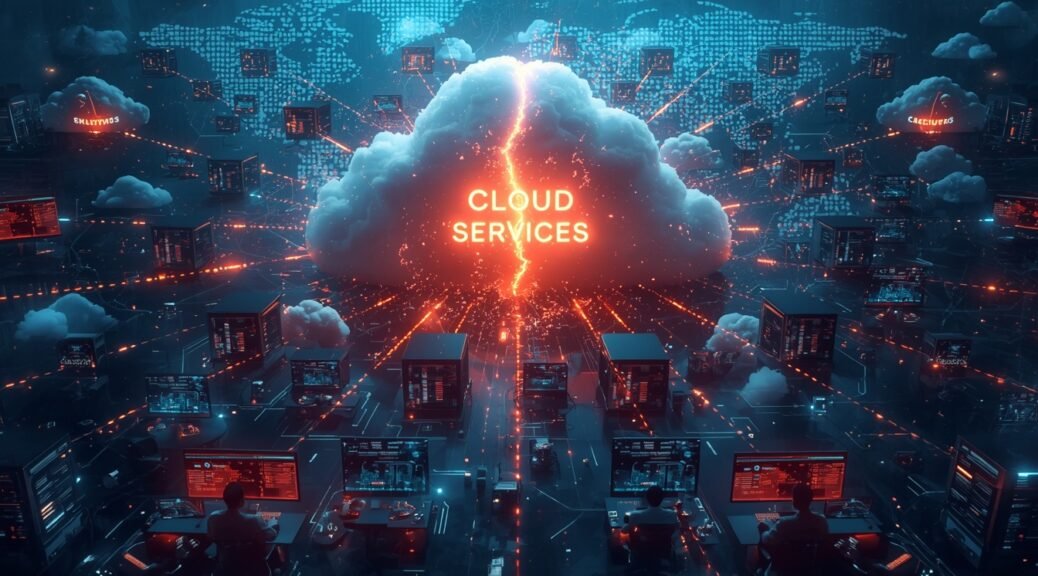
In May 2026, Railway, a full-stack cloud solutions platform, experienced a major service disruption after Google Cloud incorrectly suspended one of the company’s production accounts. The suspension affected critical infrastructure and ultimately resulted in a platform-wide outage lasting several hours.
What makes the incident noteworthy is not that a cloud provider made a mistake. Infrastructure providers have experienced outages, misconfigurations, and operational failures for decades. The more important detail is that Railway was not operating exclusively on Google Cloud.
At the time of the incident, Railway operated infrastructure across Google Cloud, AWS, and Railway Metal, its own bare-metal environment. Despite this diversification, a critical dependency remained within Google Cloud. According to Railway’s postmortem, parts of the platform’s network control plane depended on infrastructure hosted in the suspended environment. Once those systems became unavailable, workloads outside of Google Cloud gradually became unreachable despite continuing to run normally.
The incident exposed a challenge that extends far beyond a single platform: infrastructure diversification does not necessarily eliminate dependency concentration.
Why Multi-Cloud Was Not Enough
Multi-cloud architectures are commonly viewed as a mechanism for reducing infrastructure risk. The logic is straightforward. If workloads are distributed across multiple providers, then the failure of any single provider should have limited impact on the overall platform.
The Railway outage demonstrates why this assumption is incomplete.
Resilience is determined not only by where workloads run, but also by where operational control resides. Modern platforms depend on routing infrastructure, service discovery systems, deployment orchestration, authentication services, and network control planes. If these systems remain concentrated within a single provider, the architecture can still inherit a critical point of failure regardless of how broadly workloads are distributed.
In Railway’s case, the outage was not fundamentally a compute failure. It was a dependency failure. The platform had successfully distributed workloads, but a critical operational dependency remained tied to a single environment. Once that dependency disappeared, the effects propagated throughout the broader system.
The distinction is important because it changes how resilience should be evaluated. Counting providers is not enough. Understanding where critical dependencies reside is often more important.
This Is Not an Isolated Incident
The Railway outage is a recent example of a pattern that has appeared repeatedly across modern infrastructure systems.
In June 2025, Google Cloud experienced a widespread outage caused by failures within shared control systems. The incident affected multiple cloud services simultaneously and disrupted customers who depended on those services. The underlying issue was not hardware capacity or network reachability. It originated from centralized operational systems that sat beneath a large portion of the platform.
Similar patterns have appeared across SaaS platforms as well. In February 2026, Railway itself experienced another major incident after an automated abuse-detection mechanism incorrectly terminated legitimate customer workloads. Although the root cause was different, the incident once again demonstrated how centralized control systems can create disproportionately large blast radii when they fail.
The common theme across these incidents is not cloud reliability. Large cloud providers remain among the most reliable computing environments ever built.
The recurring challenge is concentration. As more operational responsibility becomes centralized in shared systems, failures in those systems can affect increasingly large portions of the ecosystem.
Alternative Infrastructure Models
The conventional response to concentration risk is additional redundancy. Organizations deploy across more regions, add more cloud providers, and replicate infrastructure across multiple environments.
These strategies remain valuable, but they do not necessarily address the underlying dependency model. If operational control remains concentrated, additional infrastructure may simply increase complexity without eliminating systemic risk.
Several alternative infrastructure models attempt to address this problem from different directions.
Self-Managed Infrastructure and Colocation
The most direct approach is increasing infrastructure ownership.
Organizations can run workloads on their own hardware, either in private facilities or through colocation providers such as Equinix and Digital Realty. In this model, the provider supplies physical facilities and connectivity while the customer retains ownership and operational control of the hardware.
This approach reduces dependence on cloud provider account systems, managed service control planes and provider-level policy decisions. The tradeoff is significantly increased operational responsibility.
While this model is rarely practical for early-stage startups, it remains an important strategy for organizations seeking greater control over critical infrastructure.
Decentralized Compute Networks
A different approach involves distributing ownership of the infrastructure itself.
Projects such as Akash, Flux, and Golem attempt to provide compute resources through networks of independent operators rather than centralized cloud providers. Capacity is supplied by participants across the network and allocated through marketplace mechanisms.
This changes the concentration model fundamentally. No single provider controls access to the entire infrastructure layer, and no single organization can suspend access across the entire network.
These systems remain less mature than traditional cloud platforms, particularly in areas such as operational tooling, enterprise support, and service guarantees. However, they represent one of the few efforts aimed at reducing infrastructure concentration rather than simply distributing workloads across existing providers.
Decentralized Storage and Open Protocols
Storage introduces a similar dependency challenge.
Much of the modern internet ultimately relies on storage infrastructure controlled by a relatively small number of providers. Decentralized storage networks attempt to distribute that responsibility across independent operators.
Projects such as Filecoin, Storj, and Arweave approach the problem differently, but all share a common objective: reducing reliance on centralized infrastructure ownership.
The same philosophy appears in protocol-based systems such as IPFS. Rather than depending on a single platform operator, participants coordinate through open protocols implemented across independent nodes.
These technologies are not direct replacements for traditional cloud infrastructure. Their operational characteristics, performance guarantees, and adoption levels differ significantly. Nevertheless, they represent alternative models that reduce the concentration of dependencies at the infrastructure layer itself.
Conclusion
The Railway outage was not simply a Google Cloud incident. It demonstrated that infrastructure diversification and dependency diversification are not the same thing.
A platform can operate across multiple providers while still relying on a single operational control point. As infrastructure continues to consolidate around a small number of dominant platforms, resilience will depend less on the number of providers and more on how critical dependencies are distributed throughout the system.
Hackathon Tracker