
Quantus Q-Day Event Predicts the Demise of Bitcoin
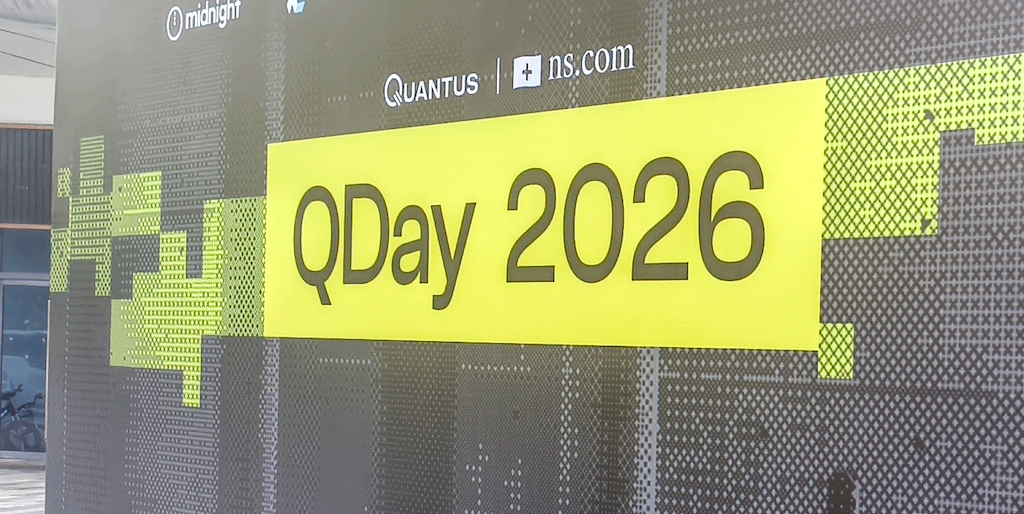
Quantus convened cryptographers, blockchain builders, and investors at the Network School to thrash out how blockchains should upgrade for the post-quantum era. The event was headlined by Balaji Srinivasan, founder of Network School. The mood in the room was broadly optimistic: new encryption and authorization schemes are emerging that can withstand quantum attacks, and the hosts pitched their own chain as a path to a quantum-proof future. For me, though, the real signal cut the other way. The consensus wasn’t confidence—it was how little has actually been done, and how deeply miners disagree on what to do next. Should that standoff finally move Bitcoin’s price, today’s market bloodbath will look just like a paper cut compared to beheading that a quantum hack can lead to.
Bitcoin’s Strenth’s Could Become Its Flaws
For all the headlines about quantum threats, Bitcoin is the most exposed major chain for one blunt reason: nothing has shipped. Every effort so far is a proposal or a testnet, not activated protocol. BIP-360 sketched a Pay-to-Merkle-Root output type in February 2026; BIP-361 followed in April with a contentious plan to sunset legacy signatures and freeze unmigrated coins; and BTQ Technologies has run Dilithium-based transactions on a testnet. None of it touches mainnet, and there is still no agreed activation parameter or signaling mechanism.
The obstacles are structural, not technical. Bitcoin’s change-averse culture, its leaderless governance, and the political weight of a trillion-dollar network make any hard-forking cryptographic upgrade treacherous—and roughly 6.7 million BTC sit in addresses with exposed public keys, more than a third of the circulating supply, turning migration into a coordination problem with no clean answer. Meanwhile Algorand executed a live post-quantum transaction in November 2025 and Ethereum has a dedicated team working toward a 2029 target. Bitcoin has produced documents and debate, but not one quantum-resistant coin on its live ledger. The distance between the urgency of Google’s 2026 resource estimates and Bitcoin’s actual on-chain progress is the widest in the industry and could make everyone’s worse nightmare’s true.
What’s at Stake When Bitcoin Falls
When people picture a Bitcoin crash, they picture a number on a chart—a brutal week, a washed-out cycle, a recovery eighteen months later. A quantum-driven fall is a different animal. A normal crash is a crisis of price; a quantum break is a crisis of trust. Bitcoin’s entire value rests on a single promise: that the coins in an address can’t be moved by anyone but the holder. Strip that away and you’re not discounting Bitcoin, you’re invalidating it.
The blast radius is far wider than the asset itself. Bitcoin is the reserve asset of the whole industry—the benchmark every other token is priced against, the collateral under lending desks and derivatives, the holding inside spot ETFs now sitting in pension and retirement portfolios, and the centerpiece of corporate treasuries that bet the balance sheet on it. A sharp BTC fall doesn’t stay in BTC; it cascades through stablecoins, DeFi collateral, and leveraged positions within hours. And the contagion of 2022—Terra, Three Arrows, FTX—played out when institutional exposure was a fraction of what it is today.
The quantum scenario then adds something no previous crash ever had: forced selling at the protocol level. Roughly 6.7 million BTC sit in addresses with exposed public keys—including, plausibly, Satoshi’s untouched coins in their early pay-to-public-key outputs. A capable attacker doesn’t merely spook the market; they can move those coins. That’s a supply shock and a confidence shock in the same instant—dormant wallets waking up and walking off, with no exchange halt, no circuit breaker, no authority anywhere to freeze the damage. The very thing that makes Bitcoin ungovernable in good times makes it undefendable in this one.
That’s what the disagreement in that room was really about. Not whether Bitcoin’s price might wobble, but whether the foundation everyone else is standing on actually holds—and whether the people who steward it can agree to reinforce it before they find out the hard way. Thank fully quantum resistant chains like Quantus, Algorand, IOTA, Quantum Resistant Ledger, etc are leading the way to a secure
Other key takeaways
- Q-Day is the moment quantum computers can break today’s encryption—above all the public-key systems securing email, VPNs, and transactions.
- The threat is already live. Attackers are harvesting encrypted data now to decrypt later, once the hardware catches up (“harvest now, decrypt later”).
- Timing is contested, but the window is closing. Many experts put meaningful risk within the next decade—and a full migration can take just as long.
- Almost no one has started. Most organizations, especially Web 2.0 incumbents, have done nothing yet, and the risk compounds when sensitive data has a long shelf life.
- You don’t need to rebuild everything today. You do need a full inventory of where your cryptography lives and a staged plan to migrate before Q-Day, not after.
- Quantum computation is hard!! Tried my best to understand Qbits taught by Lana Ivina of Circuitlabs.io, but alas I could barely make it past the first ten minutes and my school time PTSD’s came rushing back. If you are interested in learning the same, check out the circuitlabs.io workshops.
Hackathon Tracker